Mold on Bathroom Ceiling: What Causes It and When to Worry
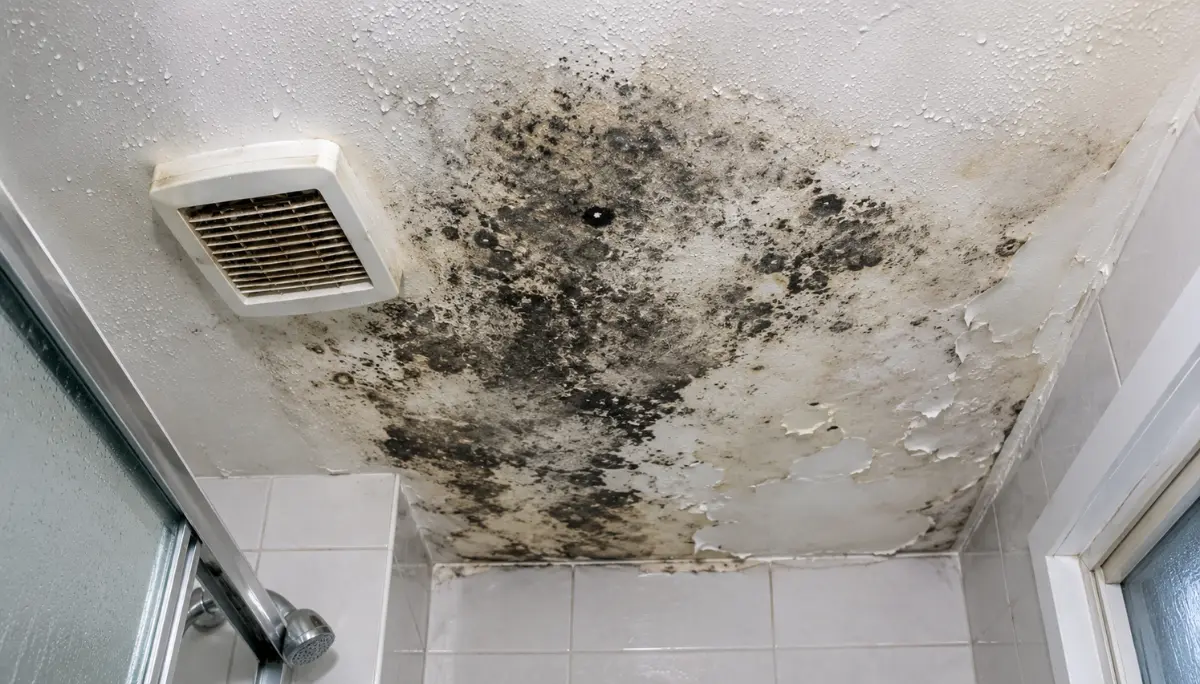
You step out of the shower and look up. Dark spots cover your bathroom ceiling. That’s mold. Bathroom ceiling mold is common in Sarasota, but common doesn’t mean harmless. At Sarasota Mold Removal, we help homeowners identify and eliminate these problems before they spread. Understanding what causes it helps you decide whether to panic or grab a cloth.
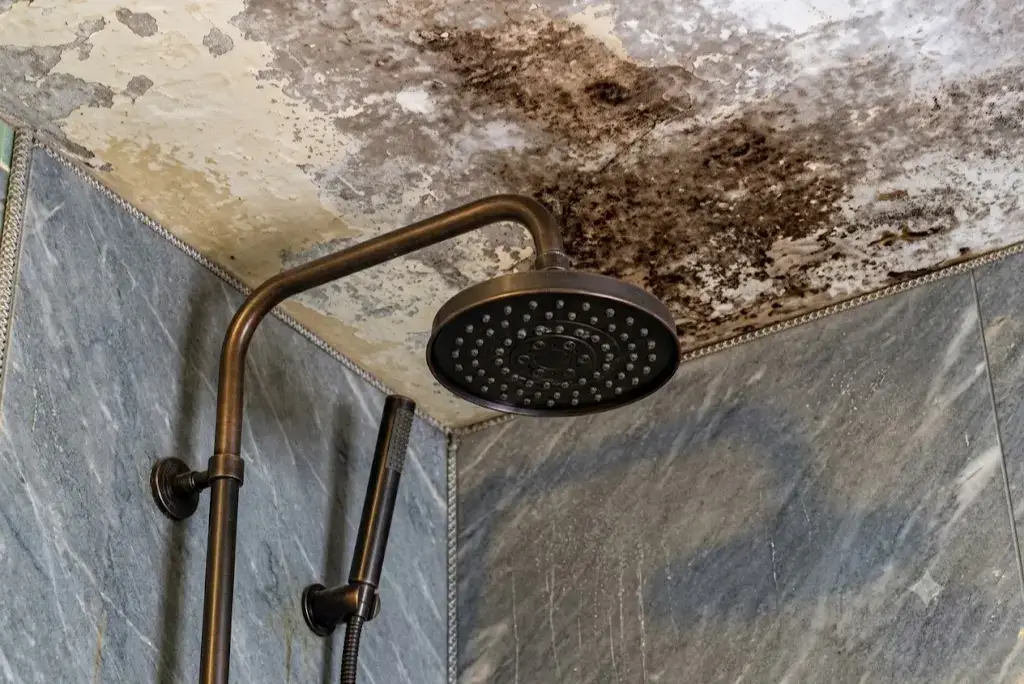
Bathrooms create the perfect storm for mold growth. Warm water, high humidity, and limited ventilation combine to create ideal conditions. In Sarasota’s climate, this problem intensifies dramatically. Our average humidity exceeds 70 percent year-round. Bathrooms push humidity even higher. Mold doesn’t just appear on bathroom ceilings, it thrives there.
This guide explains why your bathroom ceiling developed mold, assesses health risks, and guides you toward the right solution. Some bathroom ceiling mold needs immediate professional attention. Other mold responds to simple cleaning. Knowing the difference saves money and protects your family.
Why Bathrooms Attract Mold More Than Any Room
Bathrooms differ from other rooms in your home fundamentally. They generate extreme moisture. This moisture creates an environment where mold loves to establish and spread rapidly.
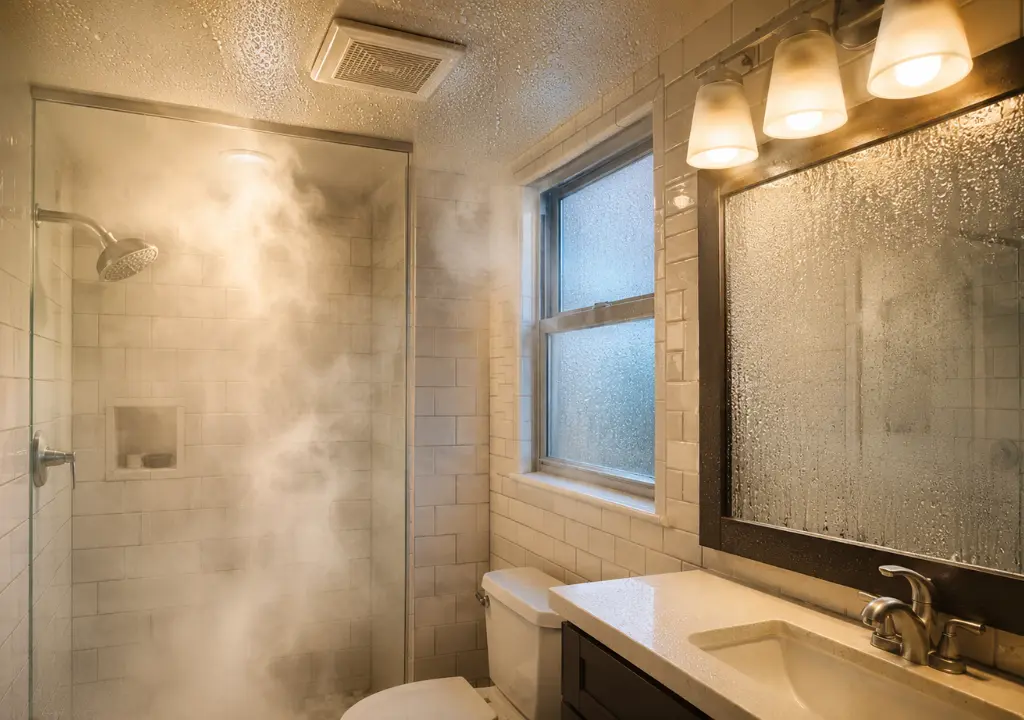
Showers produce massive amounts of steam. Running a shower heats water to 104 degrees Fahrenheit. This hot water creates steam that rises and spreads throughout the bathroom. Steam carries moisture to every surface, including your ceiling. A 10-minute shower generates enough humidity to raise bathroom moisture levels from 30 percent to over 80 percent instantly. This moisture doesn’t disappear quickly like it would in other rooms.
Unlike kitchens where cooking steam eventually escapes, shower steam lingers in bathrooms for hours. It condenses on cool surfaces. Ceiling surfaces, especially near exhaust fans, become moisture collectors. Standing water forms on ceiling materials. Mold needs 48 hours of sustained moisture to establish. Bathroom conditions provide exactly that environment. Bathrooms also have limited air exchange compared to bedrooms or living rooms. Most bathrooms have no windows or small windows people keep closed for privacy. Humidity becomes trapped. Air stagnates. Moisture accumulates rather than dissipating naturally.
The Perfect Moisture Cycle Happening Above Your Head
Bathroom ceiling mold develops through a predictable cycle. Understanding this cycle helps you prevent it or address it early.
The cycle begins
with your shower
Hot water creates steam. Steam rises because it’s lighter than cool air. Steam reaches your bathroom ceiling. This is why ceiling mold develops more readily than wall mold—heat rises directly to ceilings.
Steam condenses
on ceiling materials
Bathroom ceiling temperature stays cooler than the air around it. This temperature difference causes steam to condense into liquid water. Paint, drywall, insulation, and ductwork all become wet. Water pools in textured ceiling areas. Smooth ceilings shed water slowly because water has nowhere to collect.
Moisture remains
trapped in materials
Moisture remains trapped in materials. Unlike walls where water runs downward, ceiling water stays where it pools. Drywall absorbs water into its gypsum core. Insulation above the ceiling traps moisture. Paint holds moisture against the surface. Materials stay damp for hours. Sometimes dampness persists for days.
Damp materials welcome
mold establishment
Mold spores enter bathrooms through air and existing surfaces. When they land on damp materials, they germinate. Mold begins growing within 24 to 48 hours. Bathroom dust provides organic food. Bacteria consume cellulose in drywall and wood. Mold grows explosively in this environment.
Mold releases compounds
causing visible discoloration
Mold growth appears as dark spots, streaks, or patches. Initially, spots are small and isolated. Spores spread through the air. More spots establish. Within weeks, visible mold covers significant ceiling areas. The longer moisture persists, the faster mold spreads.
Your exhaust fan should interrupt this cycle
Running an exhaust fan during and after showers removes humid air. Air exits to outside. Humidity drops. Moisture stops accumulating. The cycle stops. But exhaust fans often malfunction or get installed improperly. When fans fail, the cycle continues uninterrupted. Mold establishes and spreads.
Sarasota’s Climate Makes Bathroom Mold Inevitable
Bathrooms in dry climates rarely develop mold. Sarasota bathrooms develop mold consistently. This isn’t a coincidence. Our climate creates unique challenges.
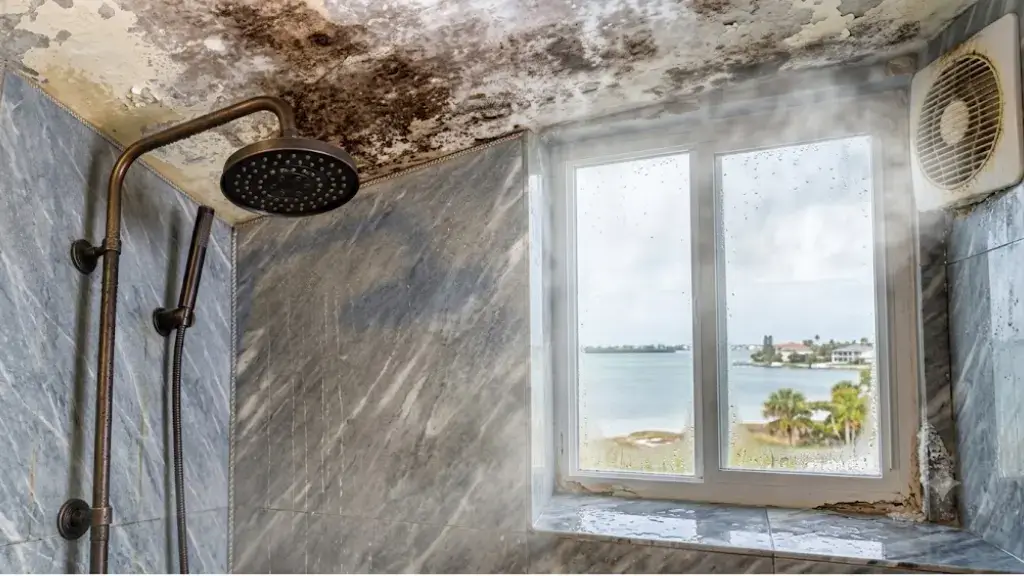
Our average humidity sits at 70 percent year-round. Compare this to Denver at 45 percent or Arizona at 25 percent. Sarasota’s baseline humidity is already 50 percent higher than most U.S. climates. When bathrooms add another 30 to 40 percent humidity, indoor humidity exceeds 100 percent. Water condenses instantly.
Summer humidity peaks exceed 85 percent. June through September, outdoor humidity regularly reaches 85 percent. Indoor bathrooms during showers hit 90 to 95 percent humidity. Even with exhaust fans running, indoor humidity struggles to drop below 70 percent. This creates perfect mold conditions for four months straight.
Sarasota homes feature extended cooling seasons. Homes stay air-conditioned from May through October. This creates the temperature differential driving condensation. Cool interior air meets warm bathroom steam. Condensation forms aggressively.
Salt air complicates moisture problems. Sarasota sits on Florida’s Gulf Coast. Salt particles from ocean air penetrate homes. Salt attracts moisture from humid air. Materials stay damp longer. Salt deposits trap water. Homes near Siesta Key, Lido Key, and Gulf Gate Estates face heightened salt-moisture challenges. Bathroom ceilings near exterior walls show more aggressive mold in coastal neighborhoods.
Sarasota’s building construction choices amplify problems. Many Sarasota homes were built in the 1980s and 1990s. These construction eras prioritized energy efficiency through tight sealing. Homes don’t breathe naturally. Bathrooms installed with exhaust fans venting into attics rather than outside—common in that era—trap moisture. Attic mold spreads downward into bathrooms. Modern building codes require external venting. Older homes have ingrained problems.
Neighborhoods show different vulnerability levels. Lakewood Ranch homes built in the 1990s often have exhaust vents terminating in attics. Palmer Ranch homes feature inconsistent ventilation standards. Siesta Key properties face coastal salt air complications. Gulf Gate Estates sits near water drainage issues adding moisture. South Gate homes in older sections have aging ventilation systems failing.
Hurricane season adds water damage complications. Storm surge, rainfall, and roof damage from hurricanes create water infiltration. Bathrooms above water-damaged areas develop persistent moisture problems. Post-hurricane bathrooms show mold development months later as moisture gradually emerges from damaged materials.
Sarasota’s climate doesn’t just encourage bathroom mold—it demands constant vigilance to prevent it. Homeowners elsewhere can neglect bathroom ventilation. Sarasota homeowners cannot.
Mold Types Growing on Your Bathroom Ceiling
Not all bathroom ceiling mold is the same species. Different mold types have different characteristics and health implications.
Aspergillus appears on bathroom ceilings most frequently
This mold tolerates the temperature and humidity fluctuations bathrooms experience. Aspergillus appears black or dark gray with a powdery texture. It doesn’t require constant wetness like Stachybotrys. Aspergillus establishes readily in Sarasota bathrooms.
Stachybotrys chartarum grows in very wet bathroom conditions
Black mold appears as dark green to black slimy growth. Bathroom ceilings above continuously wet areas, constantly running exhaust fans venting improperly, chronic roof leaks, host Stachybotrys. The slimy texture distinguishes it from Aspergillus. Learning how to spot black mold visually helps you catch it early. Black mold poses greater health concern than Aspergillus.
Penicillium varieties show up in older bathroom construction
These blue-green molds grow on diverse bathroom materials. Penicillium tolerates cooler temperatures than Aspergillus. Bathrooms in air-conditioned homes host Penicillium readily. Less common than Aspergillus, but still frequent.
Cladosporium establishes in both wet and drier areas
This brown to black mold appears on bathroom ceilings where humidity fluctuates significantly. Cladosporium tolerates the cycle of wet-and-dry better than moisture-demanding species. Spray and forget bathrooms without consistent exhaust fan use often feature Cladosporium.
Mixed mold colonies appear together on bathroom ceilings
A single ceiling spot rarely hosts one species. Multiple molds establish simultaneously. Different species thrive at different humidity levels and temperatures. Bathrooms provide diverse microhabitats—wet corners, drier areas, temperature variations. Multiple species coexist and compete.
The Real Problem: Exhaust Fan Failures and Venting Mistakes
Bathroom ceiling mold rarely develops in homes with properly functioning exhaust fans venting outside. The problem isn’t usually the mold itself—it’s the ventilation system failing to remove moisture.
Exhaust fans that don’t run are useless. Many homeowners install exhaust fans but never use them. Some people open bathroom windows instead. Some assume natural air circulation handles moisture. Exhaust fans only work when running. Running fans during and after showers is essential. Not running them guarantees mold on ceilings.
Exhaust fans venting into attics create catastrophic problems. This is the most common Sarasota bathroom mistake. Original construction in older homes often vented bathroom exhaust directly into attics. Building codes changed decades ago. But older homes retain these problematic venting systems. Moisture enters attics. Attic insulation gets wet. Attic mold spreads extensively. Moisture drips down through ceiling materials into bathrooms. Bathroom ceiling mold becomes severe.
If your home was built before 1995, check where your bathroom exhaust duct terminates. Climb into your attic. Follow the duct. If it ends inside the attic rather than exiting through the roof or outside wall, you have a serious problem. This single issue causes more bathroom ceiling mold in Sarasota than any other factor.
Blocked or crimped exhaust ducts fail silently. Exhaust ducts get crushed during attic work. Insulation blocks ducts. Moisture-resistant tape deteriorates and separates. When ducts become partially blocked, air can’t escape efficiently. Moisture backs up into bathrooms. Pressure builds. Damp air leaks into ceiling cavities. Mold establishes in walls and cavities you can’t see.
Dampers that fail leave ducts open year-round. Exhaust duct dampers prevent outdoor air from entering bathrooms when fans stop. Failed dampers hang open. Humid outdoor air enters ducts. This outdoor humidity mixes with bathroom moisture. Duct interiors stay damp. Mold grows inside ducts. Every time the fan runs, it spreads this mold spore-laden air throughout your bathroom.
Exhaust fans sized incorrectly don’t move enough air. Bathroom fans need to exchange all air in the bathroom within 20 minutes. Undersized fans run for 20 minutes and still leave humidity elevated. Humidity remains. Mold thrives. Modern large bathrooms need more powerful fans than older systems provide.
Exhaust fans with short runtimes don’t remove enough moisture. Running a fan for five minutes after a shower removes initial moisture. But humidity stays elevated for hours. Mold spores germinate and grow while humidity remains high. Fans need to run longer—30 to 60 minutes after showers—to truly lower humidity.
Bathroom humidity isn’t always obvious without measurement. Homeowners assume bathrooms dry out naturally. They don’t. Without measurement tools, you can’t see humidity. It feels damp but seems manageable. Meanwhile, humidity remains at 70 percent for hours. Mold establishes silently.
These ventilation failures explain why bathroom ceiling mold is so common in Sarasota. Fixing the ventilation system stops mold from returning. Cleaning mold without fixing ventilation means mold regrows within weeks.
Is Bathroom Ceiling Mold Actually Dangerous?
Bathroom ceiling mold creates unique health risks because you breathe deeply while showering. When mold grows on ceilings above showers, you inhale spores directly during every shower. Healthy individuals usually tolerate casual exposure. People with asthma, allergies, or immune compromise react strongly and develop respiratory problems quickly.
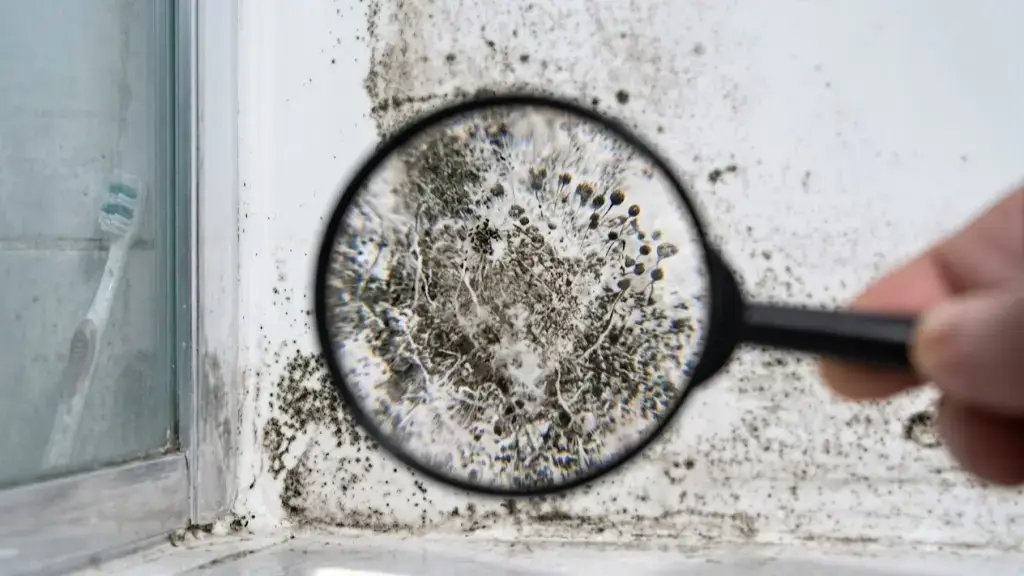
Aspergillus in bathrooms causes allergic reactions and worsens asthma in susceptible people. Black mold (Stachybotrys) produces mycotoxins of greater concern and demands professional removal immediately. Long-term exposure intensifies respiratory problems over time as inflammation builds progressively. Don’t attempt DIY cleanup of black mold—identify the slimy appearance and call professionals.
When to Worry vs. When It’s Minor
Not all bathroom ceiling mold requires professional intervention immediately. Context determines urgency.
Small isolated spots don’t warrant panic. A few dark spots on bathroom ceilings can happen temporarily. They indicate moisture was present. Proper ventilation often stops their growth naturally. If spots don’t spread within weeks, and you’ve improved ventilation, monitoring is sufficient.
Growing patches require immediate attention. Mold covering more than one square foot indicates established colonies. Growth is accelerating. This demands action. You have a moisture problem your current ventilation can’t control. Cleaning alone will fail because moisture will trigger regrowth.
Mold returning quickly after cleaning means ventilation failure. Mold regrows within weeks despite cleaning suggests underlying moisture problems persist. Ventilation isn’t working. Moisture isn’t being removed. Professional assessment should identify ventilation issues before attempting cleanup again.
Black mold appearance triggers professional response. Slimy black or dark green mold is Stachybotrys. This species warrants professional handling. Professional bathroom mold removal contains spore distribution and addresses the moisture source. Don’t attempt DIY cleanup. Professional protocols remediate properly.
Mold with musty smell indicates advanced growth. Your bathroom shouldn’t smell musty. Musty smell signals extensive mold growth producing volatile compounds. This indicates the problem is worse than ceiling spots visible from below. Professional assessment identifies hidden mold in cavities above ceilings.
Concurrent respiratory symptoms elevate concern. If family members develop coughing, wheezing, or sinus problems coinciding with bathroom mold discovery, professional removal becomes important sooner. Don’t wait. Ongoing exposure worsens respiratory effects.
Visible roof damage above bathroom requires professional assessment. If bathroom ceiling mold appears after roof damage or in the space where roof leaks exist, water damage might extend into structural materials. Professional assessment determines damage extent.
Multiple bathrooms with mold indicates system-wide problem. If several bathrooms develop mold simultaneously, a whole-home humidity or ventilation problem exists. Treating individual bathrooms won’t solve this. Professional assessment identifies system-level issues.
These scenarios help you gauge urgency. Some bathroom ceiling mold represents a minor moisture event requiring only improved ventilation. Other mold represents serious problems needing professional intervention.
Can You Clean Bathroom Ceiling Mold Yourself?
Small surface mold on painted bathroom ceilings can be wiped away with a damp cloth and mild detergent. Textured and popcorn ceilings trap mold spores inside the porous material where cleaning can’t reach it. Drywall absorbs mold into its gypsum core, and manual cleaning misses the growth deep inside. For these materials, mold regrows from within within weeks, making DIY cleanup ineffective.
Cleaning mold without addressing moisture guarantees regrowth—your exhaust fan failure or venting problem must be fixed first. Wear N95 masks when cleaning and run exhaust fans to avoid breathing spores. Extensive mold covering large ceiling areas or multiple bathrooms requires professional remediation with proper containment protocols. Professional cleanup identifies hidden mold in walls and cavities you can’t see, addressing both the problem and its cause.
FAQ: Bathroom Ceiling Mold Questions
Taking Action on Bathroom Ceiling Mold
Bathroom ceiling mold happens in Sarasota constantly. It doesn’t require panic, but it requires action.
Start by checking your exhaust fan immediately. Does it run? Does it exit outside? Follow the ductwork. Verify it terminates outside your home, not in your attic. If your fan vents into your attic, that’s your primary problem. Rerouting the ductwork to exit through the roof or wall eliminates the main moisture source. This single fix prevents most bathroom ceiling mold.
Next, commit to running your exhaust fan consistently. Turn it on during showers. Leave it running for 30 to 60 minutes after showers. This removes the humidity shower creates. Consistent fan use prevents mold establishment. Monitor your ceiling. Small spots might resolve with improved ventilation. Growing mold or mold returning after cleaning indicates professional assessment is needed. Don’t waste time repeatedly cleaning mold when ventilation fixes solve the problem.
Sarasota’s climate will continue producing bathroom moisture persistently. You cannot eliminate it. You can only manage it aggressively. This mindset shift helps. Stop viewing humidity as abnormal. Treat it as Sarasota’s reality. Manage it as you manage summer heat or hurricane season. Bathroom ceiling mold is one of the most preventable mold problems homeowners face. Unlike hidden crawl space or attic mold, bathroom issues respond well to straightforward solutions. Proper ventilation, consistent fan use, and timely attention eliminate bathroom mold permanently.
ABOUT US
Sarasota, FL, mold removal is a local, mold-only team specializing in mold removal, mold remediation, and air quality restoration. We live in the same humid Florida climate you do, and we know how Sarasota’s heat, moisture, and storm season create the perfect conditions for mold to grow unchecked. Our mission is simple: fast response, certified remediation, and homes that stay clean and safe all year long.
OUR ADDRESS
Sarasota FL Mold Removal
301 Central Ave, Sarasota, FL 34236
📞 (941) 555-0192
Areas We Serve
Serving Greater Sarasota & Surrounding Areas
Copyright © 2026 Sarasota, FL Mold Removal


