Pink Mold vs. Black Mold: Which One Should You Fear?
You find pink growth on your bathtub. Panic sets in. Is it mold? Is it dangerous? Should you call someone immediately? Then you remember hearing about black mold. Which one is worse? Which one threatens your family?
This confusion is normal. Homeowners conflate pink and black growth because both appear in bathrooms. But here’s the truth: they’re completely different organisms requiring different responses. One is bacteria. One is fungus. Their threat levels differ dramatically.
Understanding the difference removes unnecessary fear while highlighting real concerns. You’ll stop panicking over pink growth while respecting legitimate black mold threats. This guide decodes the confusion.
Pink Mold Isn’t Actually Mold
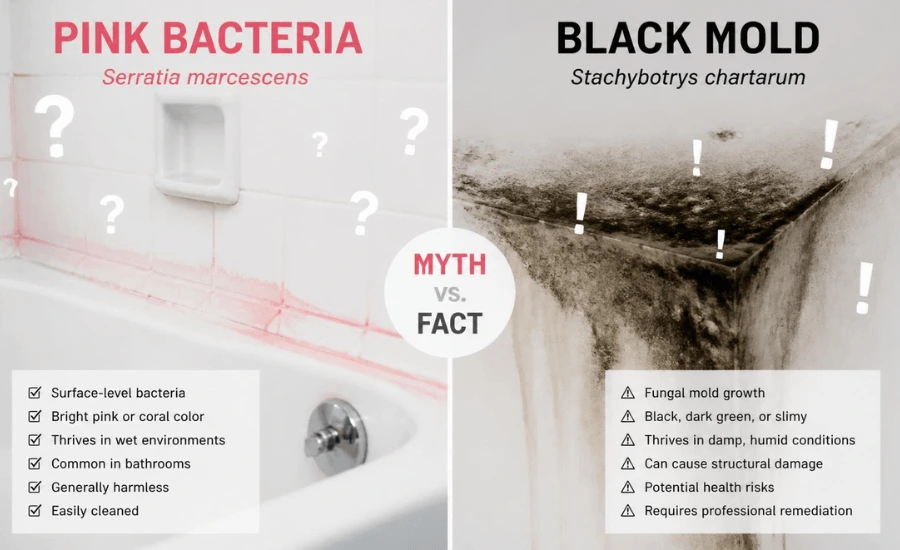
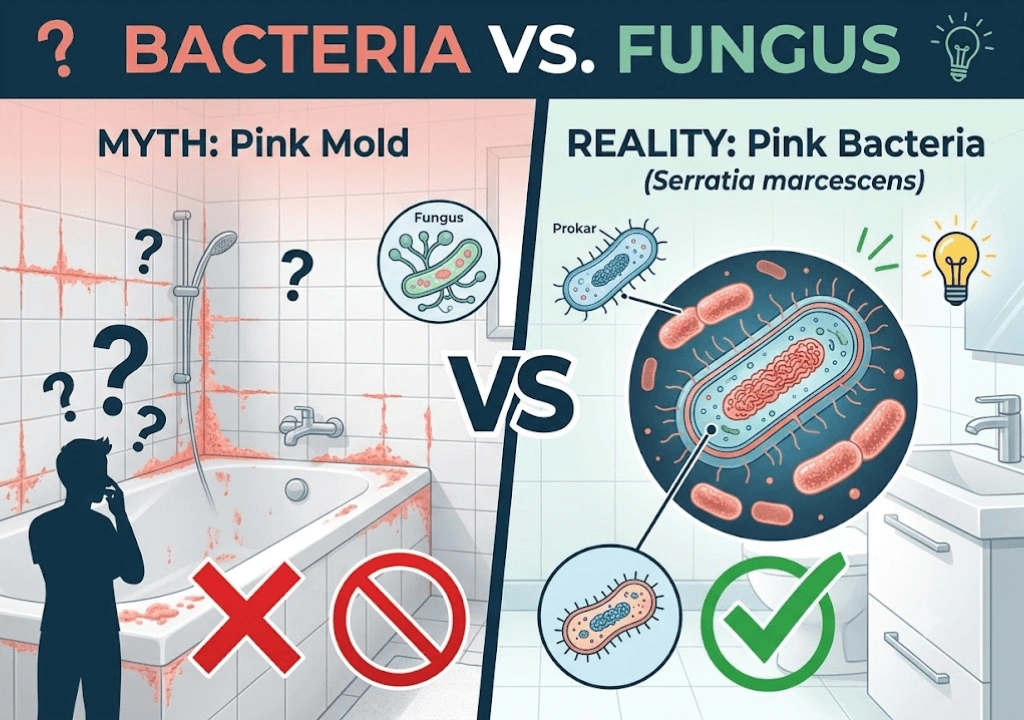
This fact surprises most people: pink growth in bathrooms isn’t mold at all. It’s bacteria. Specifically, Serratia marcescens. Mold is a fungus. Fungi are eukaryotic organisms with cell walls containing chitin. Bacteria are prokaryotic organisms with simpler cell structures. They’re fundamentally different life forms. Understanding this distinction changes how you respond. You don’t need antifungal treatment. You don’t need professional mold remediation. You need cleaning and bacteria elimination.
The confusion happened because people saw pink growth and assumed mold. Without laboratory testing, distinguishing them by appearance alone is difficult. Pink mold became the accepted term even though it’s scientifically incorrect. The name stuck despite accuracy problems. This misunderstanding drives unnecessary fear. Homeowners discover pink growth and research “pink mold health effects.” They read about mold toxins and mycotoxins. They worry. Most of that information doesn’t apply because they’re dealing with bacteria, not mold.
What Pink Growth Actually Is
Serratia marcescens is an airborne bacterium found naturally in soil and water worldwide. It enters homes through normal air and establishes on moist bathroom surfaces where soap residue and biofilm provide food. As colonies grow, they produce a pink pigment called prodigiosin, which gives pink growth its distinctive color. This pigment is created by living bacterial cells, not mold spore discoloration.
Serratia reproduces rapidly in bathrooms where warm water, moisture, and nutrients create perfect conditions. A small spot spreads significantly within days, accelerating in summer when humidity peaks. Sarasota’s high humidity and coastal environment favor this bacterium far more than dry climates like Colorado or Arizona. Serratia enters homes harmlessly and rarely establishes inside lungs—it prefers external moist surfaces.
Where Pink Growth Appears and Why
Pink growth appears consistently in specific bathroom locations. Understanding these locations helps you monitor for problems and prevent establishment.
Tub and shower walls host the most growth. These areas combine water exposure, soap residue, and moisture. Serratia colonizes grout lines and caulking especially well. The porous materials trap organic material and moisture indefinitely. Growth establishes quickly in these spots.
Shower curtains develop pink spots frequently. Plastic curtains stay perpetually damp. They collect soap residue as water runs down during showers. Pink growth appears on both sides. The film nature of curtain material enables rapid bacterial establishment.
Bathroom tile grout harbors extensive pink growth. Grout is porous. It absorbs soap residue deeply. Moisture penetrates grout completely. Serratia establishes within grout lines aggressively. This location makes removal challenging because growth extends into material depths.
Silicone caulking becomes a pink growth stronghold. Caulk around tubs and showers traps moisture and organic material. Serratia colonizes caulking extensively. Black mold also grows in caulking, but pink growth appears more frequently in caulking than other surfaces.
Toothbrush holders in bathrooms consistently show pink growth. These containers hold toothbrushes in perpetually damp environments. Water pools at container bottoms. Pink growth establishes inside and on exterior surfaces. Every household with a bathroom toothbrush holder has encountered pink growth there.
Around bathroom sinks underneath faucets. Water splashing during face washing creates moisture. Soap residue accumulates. Serratia establishes readily in these zones. Pink growth appears within days of adequate moisture and nutrients.
Bathroom exhaust fan covers develop pink spots. Fan covers collect dust and moisture. Serratia colonizes these typically-forgotten surfaces. Pink growth here indicates high bathroom humidity levels.
These locations share common factors: water exposure, organic material (soap, skin cells, hair), moisture retention, and temperature stability. Anywhere combining these factors welcomes pink growth.
Importantly, pink growth doesn’t indicate structural problems or serious moisture issues. It’s an annoyance and cosmetic concern. Black mold appearing in the same locations indicates something different—a real moisture control problem requiring attention.
Black Mold: The Genuine Concern
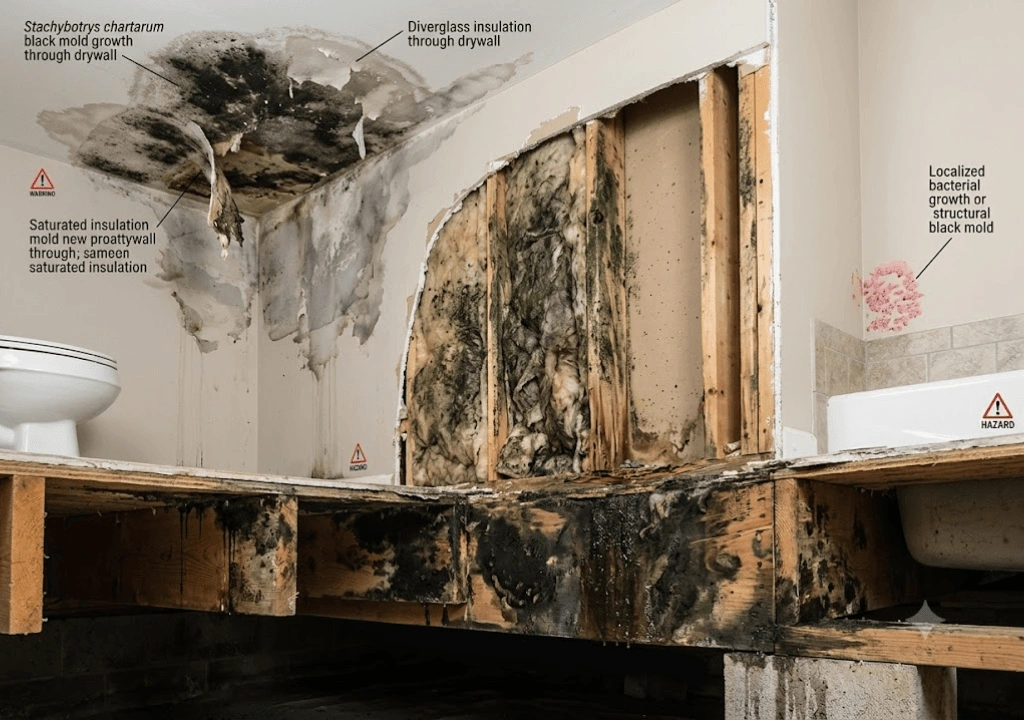
Black mold is Stachybotrys chartarum, a fungus that penetrates deeply into materials unlike surface bacteria. It requires sustained moisture and grows slowly compared to pink bacteria, but once established, it spreads extensively and damages structural materials. This fungus hides inside walls, crawl spaces, attics, and water-damaged areas. You discover it only after extensive growth when material damage has progressed significantly.
Black mold establishes in three stages: moisture triggers germination (24-48 hours), visible colony growth develops over days and weeks, then extensive colonization damages structural materials irreversibly. It produces mycotoxins that concern health professionals—wood loses integrity, drywall absorbs water deeply, and insulation becomes permanently saturated. The key difference from pink growth: black mold represents a structural and potential health problem, while pink growth represents only a surface cosmetic issue.
Why Pink and Black Mold Are Completely Different
These organisms differ in every significant way.
Organism type differs fundamentally.
Pink growth is bacteria. Black mold is fungus. These represent different biological kingdoms. Understanding this distinction clarifies everything about them.
Moisture requirements differ dramatically.
Pink bacteria establishes on surface moisture. It tolerates periodic drying. Black mold requires sustained moisture. It can’t grow if materials dry out regularly. Intermittent moisture isn’t enough for Stachybotrys establishment.
Growth rate differs significantly
Pink bacteria spreads aggressively—visibly expanding within days. Black mold grows slowly, taking weeks to become obviously problematic. Spot pink growth today and it expands noticeably within a week. Black mold progression requires patient observation.
Depth of penetration differs
Pink growth colonizes surfaces and surface residue. It doesn’t penetrate deep into materials. Black mold penetrates into material structure. It establishes inside drywall, wood, and insulation. Surface cleaning addresses pink growth completely. It misses black mold growing inside materials.
Material damage potential differs completely
Pink growth doesn’t damage materials. It’s an annoyance. Black mold destroys wood, compromises drywall integrity, and permanently damages insulation. Material replacement becomes necessary for extensive black mold infestations.
Metabolite production differs
Pink bacteria produces prodigiosin pigment. Black mold produces mycotoxins. Prodigiosin is essentially harmless. Mycotoxins raise legitimate health concerns for vulnerable individuals.
Treatment approaches differ fundamentally.
Pink growth responds to cleaning and improved ventilation. Black mold requires professional remediation addressing moisture sources, ventilation failures, and structural damage. Bleach spray works for pink. It doesn’t prevent black mold regrowth.
Spread mechanism differs
Pink bacteria spreads through air but establishes only on surfaces with adequate moisture. Black mold releases spores that travel widely but establish only in consistently moist areas. Pink spreads where soap residue exists. Black spreads where water damage persists.
Health Risks: Pink Bacteria vs. Black Fungus
Understanding health implications requires recognizing that risk varies by individual.
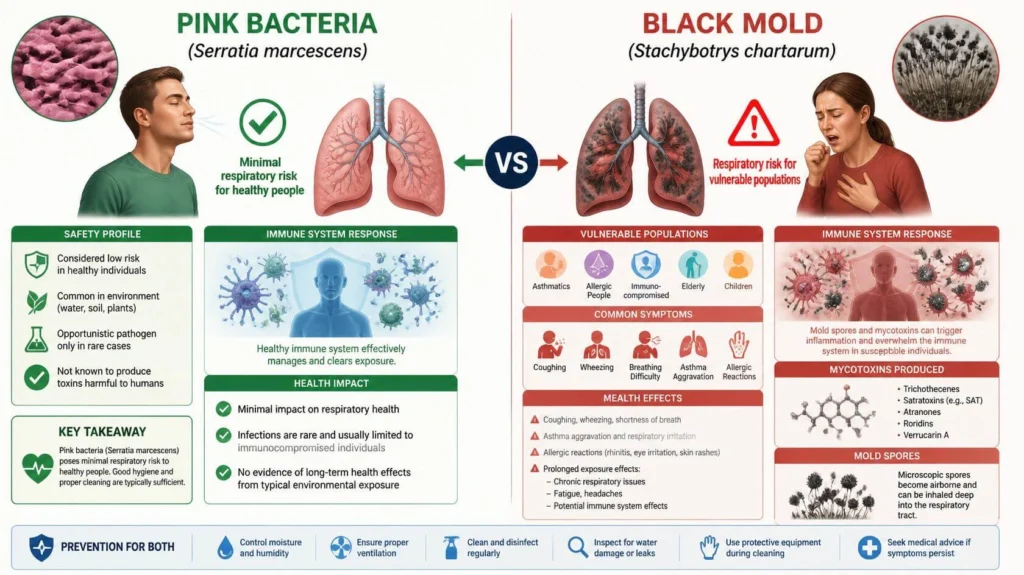
Pink bacteria poses minimal respiratory risk for healthy people. Serratia marcescens rarely causes illness in immunocompetent individuals. Healthy lungs clear airborne bacteria readily. Serratia doesn’t establish inside respiratory systems under normal conditions. Exposure creates essentially no health consequence.
Pink bacteria concerns immunocompromised people specifically. People with weakened immunity show heightened Serratia susceptibility. Hospital patients, elderly individuals, and immunosuppressed people experience occasional Serratia infections. These infections start externally and potentially spread internally. This risk is real but requires existing immunocompromise.
Black mold affects susceptible individuals more broadly. Mycotoxins produced by Stachybotrys trigger reactions in asthmatics and allergic people. Respiratory symptoms develop from spore inhalation. Coughing, wheezing, and breathing difficulty result. These effects appear in otherwise healthy people if sensitivity exists.
Asthma connection differs between organisms. Pink bacteria doesn’t typically trigger asthma. Black mold aggravates asthma noticeably. Asthmatics breathing air containing black mold spores experience heightened symptoms. This connection is documented and consistent.
Allergic reactions differ. Pink growth rarely triggers allergies. Black mold causes allergic reactions in sensitized individuals. Some people develop sensitivities over time through repeated exposure. Initial exposure might feel minor. Continued exposure intensifies reactions.
Children show different sensitivities. Children exposed to black mold show increased asthma and allergy problems. Pink bacteria exposure creates no documented pattern of childhood health problems. Developing lungs respond poorly to mold spores. Parents discovering black mold should prioritize remediation.
Long-term exposure effects differ. Chronic pink bacteria exposure causes no documented cumulative health effects. Chronic black mold exposure intensifies respiratory problems over time. Inflammation builds. Respiratory function declines gradually. This progressive worsening differs from one-time exposure effects.
Toxicity level differences are significant. Pink bacteria produces no known human toxins. Black mold produces mycotoxins affecting human cells. The toxin concentration depends on colony size and mold species strain. Some Stachybotrys strains produce higher toxin levels than others.
The honest assessment: pink growth is a nuisance. Black mold is a legitimate health concern for vulnerable people and a structural threat for everyone.
Sarasota Homes: Why You See Both
Sarasota’s climate uniquely enables both pink bacteria and black mold simultaneously. Understanding this helps you manage both proactively.
Sarasota’s baseline humidity enables pink bacteria. Average humidity of 70 percent means bathrooms stay perpetually moist. Pink bacteria doesn’t require extreme moisture. It thrives in normal Sarasota bathroom conditions. Every bathroom in Sarasota becomes a pink growth environment.
Summer humidity peaks enable rapid pink establishment. June through September, humidity exceeds 85 percent. Bathrooms become bacteria incubators. Pink growth spreads faster during summer. Winter months see slower growth. But growth continues year-round.
Coastal salt air affects pink bacteria indirectly. Salt particles attract moisture from humid air. Materials near windows and exterior walls stay damp longer. Serratia establishes more aggressively in these zones. Homes near Siesta Key and Lido Key show more persistent pink growth than inland homes.
Black mold establishes when moisture control fails. Poor ventilation, roof leaks, or water damage creates the sustained moisture black mold requires. Sarasota’s humidity alone doesn’t trigger black mold. But humidity accelerates growth once establishment begins. Black mold grows faster in Sarasota than drier climates.
Attic venting mistakes enable black mold in bathrooms. When exhaust fans vent into attics instead of outside, attic moisture accumulates. This moisture drips down through ceiling materials into bathrooms. Black mold establishes on bathroom ceilings. The moisture originates from improper ventilation, not bathroom conditions.
Pre-1995 construction compounds problems. Older Sarasota homes from the 1980s and 1990s often feature attic exhaust venting. Palmer Ranch and Lakewood Ranch homes built in this era frequently have these venting mistakes. The result: bathrooms simultaneously host pink bacteria on surfaces and black mold on ceilings.
Hurricane season intensifies black mold risk. Storm water infiltration creates sustained moisture. Bathrooms above water-damaged areas develop persistent dampness. Black mold establishes months after flood events. Post-hurricane Sarasota homes show increased black mold problems.
Mixed infestations occur regularly. Sarasota bathrooms commonly show both pink and black simultaneously. Pink covers shower walls and soap-residue areas. Black mold appears on ceilings if ventilation failed. You might need to address both problems in the same bathroom.
This Sarasota specificity explains why you see both organisms. Most climates host one or the other. Sarasota’s moisture profile, construction patterns, and humidity enable both to flourish.
How to Treat Pink and Black Differently
Treatment approaches diverge completely because organisms differ fundamentally.
Pink bacteria responds to aggressive cleaning. Bathroom bleach spray kills Serratia readily. Vinegar solutions work effectively. Bathroom cleaners designed for soap scum removal address pink growth. Surface cleaning eliminates pink bacteria. Prevention requires consistent bathroom ventilation.
Prevention of pink recurrence is straightforward. Run exhaust fans during and after showers. Reduce humidity below 70 percent. Dry tub and shower surfaces after use. Remove soap scum regularly. These actions prevent pink growth establishment. Humidity control matters most.
Pink removal doesn’t require professionals. DIY cleaning handles pink bacteria completely. No special equipment or protective gear is necessary. Standard bathroom cleaning products work. Accessibility makes treatment simple.
Black mold requires moisture source elimination first. Cleaning black mold without addressing moisture guarantees regrowth. Identify water damage, roof leaks, or ventilation failures. Fix these problems. Cleaning alone addresses symptoms while ignoring disease.
Black mold remediation demands professional intervention for extensive growth. Large colonies require containment protocols preventing spore distribution. Professionals identify hidden mold inside walls and cavities. They address moisture sources. They remediate properly. DIY black mold cleanup fails because homeowners miss hidden growth.
Small black mold patches might allow careful homeowner cleanup. If black mold covers less than one square foot and you identify the moisture source and fix it, careful manual removal is possible. Wear N95 masks. Avoid disturbing mold aggressively. Prevent spore distribution. But professional assessment first confirms the mold type and remediation appropriateness.
Black mold prevention requires moisture management. Ensure exhaust fans vent outside, not into attics. Run fans consistently. Fix roof leaks immediately. Control humidity below 60 percent. Address water damage within 24 hours. These actions prevent black mold establishment.
The key treatment difference: pink gets cleaned, black gets remediated. Pink cleaning is surface treatment. Black remediation is structural problem-solving. Budget and effort requirements differ dramatically.
FAQ: Pink Mold and Black Mold Myths Debunked
ABOUT US
Sarasota, FL, mold removal is a local, mold-only team specializing in mold removal, mold remediation, and air quality restoration. We live in the same humid Florida climate you do, and we know how Sarasota’s heat, moisture, and storm season create the perfect conditions for mold to grow unchecked. Our mission is simple: fast response, certified remediation, and homes that stay clean and safe all year long.
OUR ADDRESS
Sarasota FL Mold Removal
301 Central Ave, Sarasota, FL 34236
📞 (941) 555-0192
Areas We Serve
Serving Greater Sarasota & Surrounding Areas
Copyright © 2026 Sarasota, FL Mold Removal