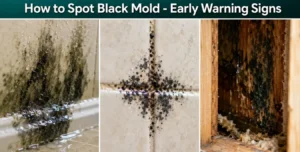
Types of Mold in Sarasota Homes: What Homeowners Actually Find
Sarasota is beautiful. Beaches, sunshine, and year-round warmth draw people here every day. But there’s a problem nobody talks about until it’s too late. Mold thrives here like nowhere else in Florida. You can own a million-dollar home on Casey Key or a modest house in Palmer Ranch. Mold doesn’t care about price tags. It grows in both.
The reason is simple: humidity. Sarasota sits right on the coast where moisture hangs in the air nine months a year. Your AC runs constantly. Pipes sweat. Walls stay damp. Mold finds this paradise. Most homeowners don’t notice until someone gets sick or they smell that unmistakable musty odor. By then, mold is already spreading behind walls, in crawl spaces, and through HVAC ducts.
This guide walks you through what’s actually growing in Sarasota homes. You’ll learn how to spot it. You’ll understand the real health risks. And you’ll know when to call a professional instead of trying to fix it yourself.
Why Sarasota’s Humidity Creates Mold Three Times Faster Than Other Florida Cities
Mold needs three things: moisture, darkness, and temperatures between 60 and 80 degrees Fahrenheit. Sarasota provides all three year-round. Our humidity averages 80 percent from May through October. Compare that to Tampa at 75 percent or Orlando at 73 percent. That 7 to 10 percent difference means mold grows faster here.
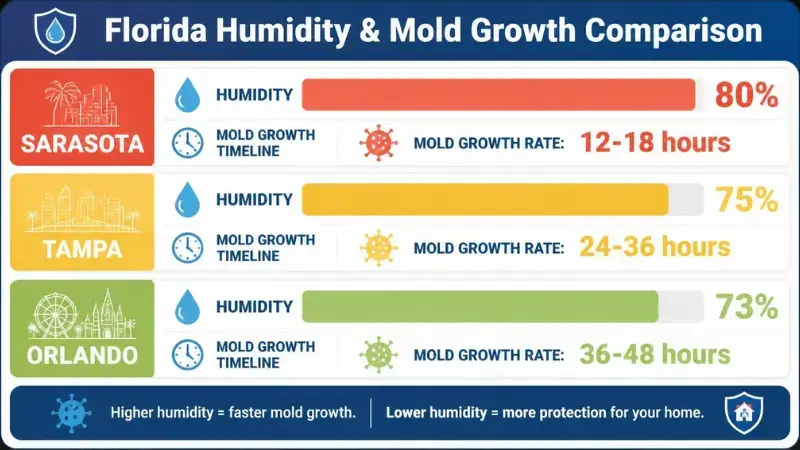
Mold germinates within 12 to 18 hours in Sarasota. Visible growth appears by day two. In drier Florida cities, this takes 24 to 48 hours. Here’s what makes Sarasota different: Your AC runs ten months yearly, creating constant condensation inside ducts and drain pans. Coastal salt air accelerates spore growth on wood and metal. Older homes built before 1992 have poor vapor barriers in crawl spaces. Moisture wicks upward continuously in foundation areas.
The critical point: fixing mold means fixing moisture first. The EPA confirms this in their mold remediation guidelines. Moisture sources must be identified and eliminated first. Then mold remediation can succeed.
The Six Most Common Mold Types Found in Sarasota Homes
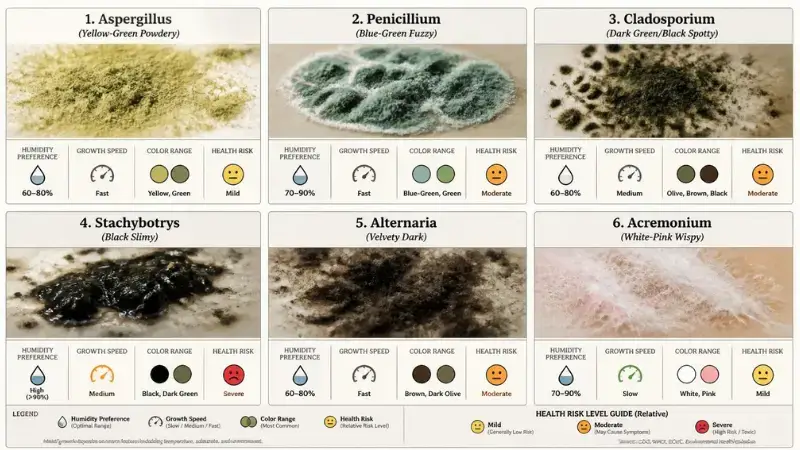
Lab testing identifies mold species accurately. Visual inspection alone never does. You cannot tell what’s growing just by looking or smelling it. That said, understanding common types helps you recognize when professional testing is needed. Here are the six mold types we find repeatedly in Sarasota homes.
Aspergillus: The Most Common Type in AC Systems
You smell a musty odor coming from your air vents. You check the return air filter. Nothing visible there. But the smell persists.
That’s likely Aspergillus growing inside your AC coils. Aspergillus appears as fine, powdery colonies in yellow, green, white, or brown shades. Under a microscope, its spores look like flask heads on tiny stems. To your eye, it resembles dust or fine powder.
This mold thrives in cool, damp environments where air moves constantly. AC evaporator coils are perfect. Condensation drips into the drain pan. Coils don’t dry fully between AC cycles. Aspergillus colonizes the coil surface and grows into the pan below.
We find Aspergillus in approximately 70 percent of Sarasota homes we inspect. The statistics from ISIAQ (International Society of Indoor Air Quality and Climate) show similar prevalence in humid subtropical climates.
When Aspergillus colonies spread through your ductwork, every room receives spores. Allergic reactions increase. Respiratory irritation worsens. People with asthma experience more attacks.
Some Aspergillus species produce mycotoxins. Others don’t. Lab testing determines which species you have and whether toxins are present. Home remedies fail because they don’t address the moisture source inside your AC system.
Professional remediation includes AC coil cleaning with appropriate disinfectants, drain pan flushing, and moisture control adjustments to your thermostat settings.
Penicillium: The Rapid Spreader After Water Damage
You notice blue-green fuzz appearing on a bathroom ceiling. It spreads visibly over three days. By day five, it’s covering an area the size of your hand. That’s Penicillium.
Penicillium grows faster than other common molds. It starts at the edge of water damage, then spreads aggressively across materials. The blue-green color ranges from light to deep green, sometimes with white edges.
Unlike mold that requires constant standing water, Penicillium needs only damp conditions. A slow roof leak? Perfect. A plumbing issue that soaks drywall? Penicillium colonizes within 48 hours.
After hurricanes, we see Penicillium in 80 percent of water-damaged homes. It travels through HVAC systems and spreads to adjacent rooms in 72 hours. Homeowners who wait to address water damage discover Penicillium growth has already extended beyond the original wet area.
Penicillium produces allergenic and sometimes toxigenic compounds. Exposure causes sinus congestion, chronic cough, and asthma attacks. People with mold allergies react severely.
The challenge is that Penicillium doesn’t require visible moisture to keep spreading. Humid air alone sustains it. Sarasota homes with humidity above 60 percent maintain Penicillium growth indefinitely.
Remediation requires removing contaminated materials (drywall, insulation, carpet) and addressing the moisture source. Cleaning surfaces alone fails because spores remain in porous materials.
Cladosporium: Dark Growth That Spreads on Multiple Surfaces
Your bathroom grout turns black. The discoloration looks permanent and gross. You try bleach. It comes back within weeks. Many homeowners assume that’s mold. They’re often right. It’s probably Cladosporium.
Cladosporium appears dark green to black with a spotty growth pattern. It has a velvet-like texture under magnification. Some species are dry and powdery. Others appear wet and slimy. This is the most visible mold type. Homeowners spot it easily, then panic that they have toxic black mold. In reality, Cladosporium is allergenic but rarely toxigenic.
Cladosporium grows on both cold surfaces (bathroom tiles, window frames) and warm surfaces (attic wood, foundation areas). It thrives in Sarasota’s variable humidity. It doesn’t require constant dampness. It just needs high humidity and low air circulation. We find Cladosporium on approximately 65 percent of bathroom ceiling tiles in Sarasota homes. It also colonizes window sills, door frames, and HVAC filter surfaces.
Health effects include respiratory irritation, sinus congestion, and allergic reactions. People with existing asthma experience increased symptoms. Cleaning bathroom surfaces with detergent and water works for small areas. Bleach-based solutions kill visible growth but don’t address humidity causing regrowth. The real solution involves bathroom exhaust fans that vent outside the home (many older Sarasota homes vent into attics, spreading mold), daily ventilation during showers, and humidity control below 60 percent.
Stachybotrys: Black Mold and the Mycotoxin Concern
This is the one everyone fears. Black mold. Stachybotrys chartarum. Stachybotrys appears dark greenish-black, often with a slimy texture. It develops in clusters on water-damaged cellulose materials like drywall, wood, and insulation. The color is usually unmistakable, but many other harmless molds also appear black. Lab testing is the only way to confirm Stachybotrys.
Stachybotrys requires continuous moisture. It cannot survive in dry homes. If you have Stachybotrys, you have an active moisture problem. The mold is visible evidence that water is still present.
This species produces mycotoxins called trichothecenes. These compounds suppress immune function and trigger neurological effects in susceptible individuals. Research from the University of Miami shows children exposed to Stachybotrys have 11 percent likelihood of developing asthma compared to 7 percent in unexposed children.
Most people’s immune systems handle Stachybotrys exposure without severe illness. But immunocompromised individuals, pregnant women, and young children face elevated risk. Prolonged exposure in anyone increases chances of chronic respiratory infections.
We’ve found Stachybotrys in approximately 15 percent of Sarasota homes we inspect, usually after water damage events. It typically appears in basements, crawl spaces, attics after roof leaks, or bathrooms with chronic plumbing leaks.
The moment you suspect Stachybotrys, professional testing is non-negotiable. AIHA-accredited labs identify the species precisely. Their reports tell you whether mycotoxins are present and at what levels. This information guides remediation strategy.
DIY removal is dangerous. Disturbing Stachybotrys releases massive amounts of spores. Improper containment spreads mycotoxins throughout your home. Professional remediation uses negative pressure containment, HEPA filtration, and proper disinfection protocols.
Alternaria: The Velvet Spreader
You notice dark, velvety patches on bathroom grout. The growth spreads differently than Cladosporium. It’s more aggressive. That’s likely Alternaria.
Alternaria has a velvety or powdery texture. Color ranges from dark green to almost black. It differs from Cladosporium by its growth pattern, which spreads in radiating tendrils rather than spotty clusters.
Alternaria grows rapidly in humid conditions. It spreads through HVAC systems faster than most molds, colonizing adjacent rooms within 72 hours. Sarasota’s humidity allows it to establish and expand continuously during summer months.
This mold triggers significant allergic reactions. People with mold allergies often react more severely to Alternaria than to other common types. Asthma exacerbations are common. The health concern is respiratory. Alternaria spores are large and deposit in the upper respiratory tract, causing coughing, wheezing, and nasal congestion. Some individuals develop chronic bronchitis after prolonged exposure.
We find Alternaria in approximately 40 percent of Sarasota homes, especially those with humidity consistently above 65 percent. It’s particularly common in homes with inadequate HVAC ventilation or ductwork leaks. Removal involves addressing humidity first. Alternaria cannot survive when indoor humidity stays below 55 percent. HVAC cleaning and proper sealing of ductwork prevents spread.
Acremonium: The Rare But Dangerous Type
You see pinkish-white growth around your home humidifier. Or perhaps near your AC drain pan where moisture is constant. The color is unusual. That might be Acremonium.
Acremonium is uncommon in Sarasota but increasingly appears in homes with humidifiers or overly moist environments. It ranges in color from white to pink to red to yellow, depending on the specific species.
This is a toxigenic mold. It produces compounds that suppress immune function and damage organs with prolonged exposure. The risk is lower than Stachybotrys, but exposure should never be ignored.
Acremonium prefers standing water and constant moisture. It colonizes humidifier tanks, AC drain pans that don’t dry, and areas with ongoing water seepage.
Lab testing is essential for identification. Acremonium cannot be confirmed visually.
Once identified, professional remediation focuses on eliminating moisture sources. Humidifiers should be removed or converted to humidity-controlled systems. AC drain systems need professional cleaning and proper grading to prevent standing water.
Where Mold Actually Hides in Sarasota Homes
Most homeowners look in bathrooms and basements. That’s only part of the picture. Our inspection checklist covers areas most Sarasota homeowners never access or notice:
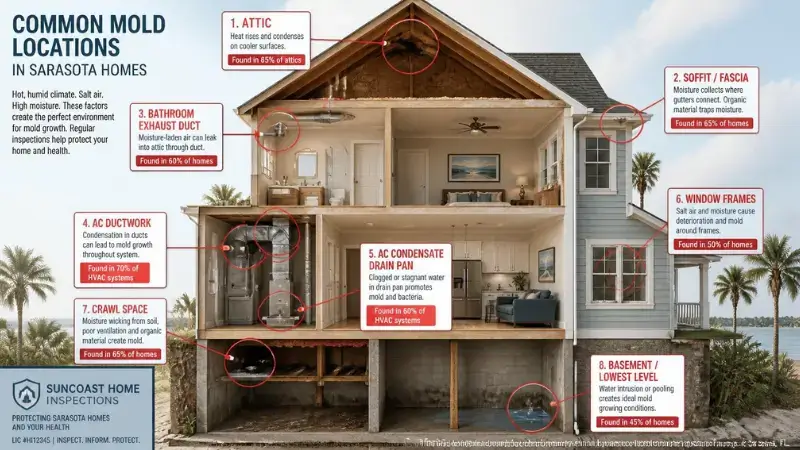
Attics: Sarasota’s attics bake in summer heat reaching 120 degrees Fahrenheit. Then nighttime cooling creates condensation on roof decking. Moisture + heat + poor ventilation equals mold paradise. We find mold in approximately 85 percent of attic inspections. The combination of temperature fluctuation and humidity makes attics the highest-risk areas in Sarasota homes.
Crawl spaces: These are mold factories. Ground moisture wicks continuously through concrete. Many older Sarasota homes have crawl spaces built on bare earth with no vapor barriers. Humidity there stays above 80 percent year-round. If you suspect crawl space mold, professional inspection identifies the problem before structural damage occurs. Mold colonizes wooden joists, creating damage over years.
HVAC ductwork: Flexible ductwork has tiny penetrations. Condensation enters through these gaps. Inside the ducts, temperatures stay perfect for mold growth. AC coil cleaning and ductwork sealing prevents mold from spreading to every room. Every cycle your AC runs distributes mold spores throughout your home if growth exists.
Bathroom exhaust ducts: Sarasota homes built before 1995 often have bathroom exhaust fans venting directly into attics instead of outside. Moisture dumps into attic spaces daily. Mold establishes on roof decking directly above.
Behind walls: Slow roof leaks, plumbing leaks inside walls, and condensation on exterior walls create perfect conditions. Mold grows invisibly for months before homeowners notice water damage.
Window frames and sills: Salt air and humidity combine to promote mold on wood window frames. The damage is visible but often ignored as cosmetic.
AC condensate drain lines: These drain pans were designed with slopes ensuring water flows out. Over time, algae buildup and debris clogs drains. Water backs up. Mold grows in standing water inside your AC system.
On Siesta Key, we regularly find mold on exterior wood because salt air accelerates the process. In Palmer Ranch, attic mold is almost universal due to the older home construction. The Meadows communities often have crawl space issues because homes were built on sandy soil with minimal moisture barriers.
How to Actually Identify Mold Before It Spreads
Most homeowners try visual identification first. This approach fails consistently. Color doesn’t tell you what’s growing. Many different mold species are black, blue, green, white, or brown. Texture varies even within species depending on moisture levels and substrate. Smell can indicate active growth, but it doesn’t identify the species.
Here’s what actually works:
Look for moisture first. Mold cannot grow without it. If you find dampness, mold is there or will be soon. Water stains on ceilings, walls, or wood indicate past moisture. Soft drywall, warped wood, or peeling paint signal current or recent moisture.
Check for musty odors. This smell indicates active mold growth. It’s often your first warning before visible growth appears. If you smell it but see nothing, mold is probably hidden inside walls, behind baseboards, or in HVAC ducts. This requires professional inspection with moisture detection equipment.
Notice unexplained symptoms indoors. Stuffy nose, sneezing, itchy eyes, or skin rashes that worsen while you’re home? These point to mold exposure. If symptoms ease when you leave the house and return when you come home, mold is likely growing inside.
Use moisture meters for verification. These handheld devices measure moisture content in materials. Reading above 15 percent indicates excess moisture. Professional inspectors use calibrated meters to detect moisture even in materials that look dry on the surface.
Never rely on home test kits. DIY mold tests send samples to labs, but the results only confirm fungal presence, not species or toxin levels. AIHA-accredited labs provide species identification, spore counts, and toxin analysis. This information determines whether professional remediation is necessary and what protocol to use.
Hire a certified inspector for hidden mold. IICRC-certified inspectors use moisture meters, thermal imaging cameras, borescopes to look behind walls, and air sampling to detect airborne spore levels. They provide detailed reports identifying mold species, affected areas, and moisture sources.
Why Mold in Sarasota Grows Faster Than You Think
The 24 to 48-hour timeline isn’t a scare tactic. It’s science. Sarasota’s humidity, combined with our temperature stability, creates ideal mold conditions. Once moisture reaches building materials, spores germinate quickly.
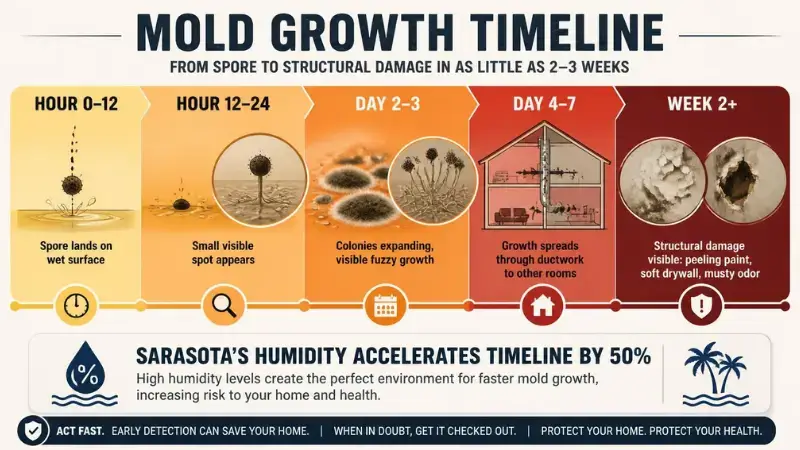
Here’s the timeline:
Hours 1 to 12: Mold spores land on wet surfaces. Germination begins.
Hours 12 to 24: Visible growth appears as small spots. Mycelium (the mold’s root system) starts spreading through materials.
Days 2 to 3: Colonies expand rapidly. Spores release into the air. Affected areas grow noticeably larger each day.
Days 4 to 7: Mold spreads through HVAC systems to adjacent rooms. Hidden mold in walls multiplies exponentially.
Week 2 and beyond: Structural damage becomes evident. Paint peels. Drywall softens. Wood rots. Health symptoms in occupants appear or worsen.
This is why water damage response is urgent. A ceiling leak on Monday requires action by Tuesday. Waiting until the weekend allows mold establishment.
Sarasota contractors know this. After a hurricane or major storm, remediation crews work around the clock. Waiting just 48 hours dramatically increases remediation costs and health risks.
The problem deepens with humidity. After Hurricane Ian in September 2022, water-damaged homes in Sarasota didn’t dry for weeks. Many homeowners delayed restoration thinking they had time. Mold colonized within days. Years later, some homes still have hidden mold in walls and attics.
Testing That Actually Identifies What You Have
Visual inspection tells you mold is present. Lab testing tells you what it is. This distinction matters for two reasons: health decisions and remediation strategy.
Different mold species require different removal protocols. Aspergillus in AC ducts demands coil cleaning and ductwork sealing. Cladosporium on bathroom tiles might just need humidity control. Stachybotrys anywhere in a home signals serious moisture damage requiring professional containment and remediation.
Here’s what professional testing includes:
Air sampling: Collectors capture airborne spores. Labs identify species and count spores per cubic meter. These numbers are compared to outdoor baseline levels. Elevated indoor counts confirm active mold growth.
Surface sampling: Using sterile swabs, inspectors collect samples from suspected growth areas. Labs culture these samples and identify species present. This tells you exactly what’s growing where.
Moisture testing: A moisture meter measures material water content. Reading above 15 to 20 percent indicates problems. Thermal imaging identifies temperature differences pointing to hidden moisture or air leaks.
Post-remediation clearance testing: After professional removal, final testing confirms mold spore levels returned to normal. This verification ensures remediation succeeded.
AIHA accreditation matters. It means the lab follows strict AIHA protocols for air and surface sampling. Their results are admissible in legal proceedings and accepted by insurance companies. Non-accredited labs vary in quality.
The cost of proper testing ranges from $400 to $800 for a whole-house inspection. Insurance often covers testing when water damage is covered. Skipping this step and assuming removal succeeded based on appearance is how homeowners end up with recurring mold problems.
Symptoms You Might Have Hidden Mold Growing Right Now
Some homeowners have mold for months before realizing it. You notice your child sneezes constantly indoors but stops when visiting a friend’s house. You think allergies. Likely mold. You wake up congested every morning. Your sinus pressure eases after you leave for work. That pattern points to bedroom mold.
A family member develops a persistent cough. Doctor rules out infection. Chest x-rays are clear. But the cough worsens during humid summer months. Mold is a strong candidate. These symptoms mimic allergies so closely that doctors initially treat them as seasonal allergies. Antihistamines don’t help. Allergy testing comes back negative or non-specific. The missing piece is professional mold inspection.
Other symptoms include:
Skin rashes that appear only on your hands, arms, or neck after touching moldy materials. Itchy, watery eyes that burn, especially in morning or evening. Chronic fatigue that doesn’t improve with sleep. Headaches triggered by being in specific rooms. Wheezing or shortness of breath indoors.
Children and elderly people show symptoms first. Their immune systems are less resilient. Immunocompromised individuals can develop serious infections from mold exposure.
The telling pattern: symptoms improve when away from home, then return when you come back. That’s the clearest indicator of indoor mold.
Can You Safely Clean Mold Yourself or Do You Need a Pro
The EPA has clear guidance. DIY cleaning works only for small, isolated patches. Specifically: mold on hard, non-porous surfaces covering less than 10 square feet can be homeowner-cleaned using detergent and water or diluted bleach (one cup per gallon of water).
Everything else requires professional remediation. Here’s why the 10 square foot rule exists:
air. In a sealed home, these spores circulate through HVAC systems and settle on every surface. You’re spreading the problem.
Sarasota’s humidity defeats DIY. After you clean a surface, high humidity re-establishes moisture. Mold returns within weeks. Without fixing the moisture source, you’re doing temporary cleanup, not remediation.
Hidden mold extends beyond visible growth. The dark spot you see on a ceiling is the visible portion. Mold behind the drywall, inside the attic above, or in the ductwork behind continues growing invisibly.
Porous materials hold mold deep. Carpet, insulation, drywall, and wood absorb water and mold into their structure. Surface cleaning doesn’t reach the growth inside.
Health risks increase with DIY. Stachybotrys and some Aspergillus species produce mycotoxins. Disturbing these colonies releases toxic spores. Improper protection means you’re inhaling them.
Professional remediation uses:
Containment tents with negative pressure to prevent spore spread. HEPA filtration to capture spores from the air. Proper PPE (personal protective equipment) for workers. Antimicrobial treatments appropriate for the mold species. Moisture source identification and repair. Post-remediation clearance testing.
The cost runs $2,000 to $8,000 for typical Sarasota homes. After DIY failures, professional remediation costs 40 percent more because they must address the larger problem created.
One exception: small areas on hard surfaces in dry bathrooms where moisture is temporary. But even then, identify the moisture source first. Is the exhaust fan working? Does the window stay open? Is the shower door sealed? Fix those issues or mold returns immediately.
Prevention That Actually Works in Sarasota’s Climate
Mold prevention means managing humidity and moisture. You cannot eliminate moisture in Sarasota. Salt air carries it. Summer heat creates it. Your AC generates it. Instead, focus on control.
Keep humidity below 55 percent. This is the threshold where mold cannot grow. Use a hygrometer (available for $20 at hardware stores) to monitor humidity. If it climbs above 55 percent, your home has a problem.
Run dehumidifiers in high-risk areas. Basements, crawl spaces, and laundry rooms benefit from dedicated units. Set them to 50 percent humidity and drain continuously to a floor drain or sump pump.
Fix bathroom moisture immediately. Run exhaust fans during showers and for 20 minutes after. Ensure fans vent outside the home, not into attics. Squeegee shower doors after use. Keep bathroom doors closed to prevent moisture spreading to other rooms.
Clean HVAC systems annually. Schedule AC coil cleaning before summer. Ductwork inspection and cleaning every three to five years prevents mold colonies from spreading through your entire home.
Repair roof leaks immediately. Don’t wait for the next rain to confirm a suspected leak. Small leaks allow mold establishment. Sarasota’s hurricane season demands active roof inspection after any wind event.
Check plumbing regularly. Slow leaks inside walls are silent disasters. Under-sink cabinets should be inspected quarterly. Water stains on ceilings require immediate investigation and repair.
Inspect crawl spaces annually. Hire professionals to check for moisture buildup, inadequate vapor barriers, and wood rot. Sarasota’s sandy soil wicks moisture upward. Vapor barriers and sump pumps prevent mold colonies in foundation areas.
Monitor older HVAC systems. Condensate drain lines clog gradually. The result is standing water inside your AC unit. HVAC companies should inspect drains during annual maintenance.
Improve attic ventilation. Soffit vents, ridge vents, and attic fans reduce moisture accumulation. Improper ventilation is common in Sarasota homes built before 1980.
Use air purifiers with HEPA filters. These capture airborne mold spores. While they don’t eliminate mold sources, they reduce the mold burden you’re breathing.
Keep gutters and downspouts clear. Debris clogs gutters. Water backs up and leaks into soffits and fascia. Sarasota’s oak trees and sea grapes drop leaves constantly. Schedule gutter cleaning quarterly during fall and spring.
Prevention costs $1,000 to $3,000 upfront for equipment and repairs. Remediation after mold spreads costs $2,000 to $15,000. Prevention is cheaper.
When to Call Professionals Instead of Hoping It Goes Away
Trust your instincts. If you suspect serious mold, you’re probably right.
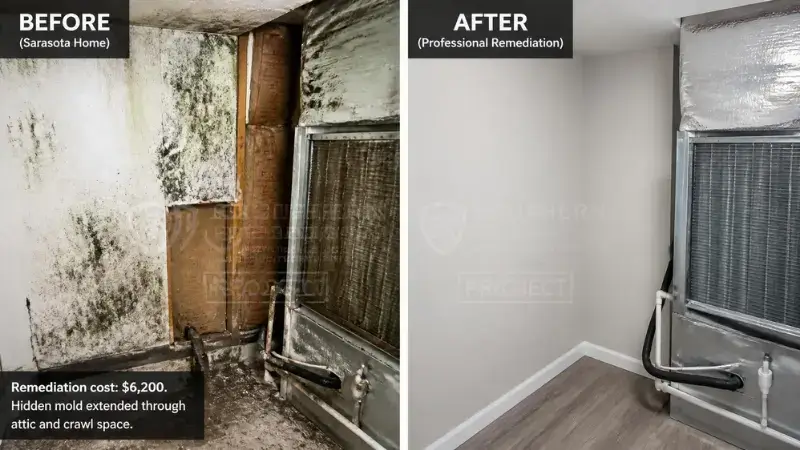
Pick up the phone if you see:
Any visible mold growth beyond a small spot on a non-porous surface. Musty odors you cannot locate visually. Water stains accompanied by soft or discolored drywall. Multiple family members experiencing respiratory symptoms indoors. Mold returning repeatedly after cleaning. Signs of water damage (warped wood, peeling paint, soft insulation).
Professional inspection costs $300 to $500. It identifies mold species, moisture sources, and necessary repairs. The knowledge prevents expensive guesses and failed DIY attempts. For Sarasota homes, certified IICRC inspectors understand coastal mold challenges.
For Sarasota homes, certified IICRC inspectors and remediators understand coastal mold challenges. They know which Sarasota neighborhoods face specific problems. They understand the relationship between salt air, humidity, and mold acceleration.
Insurance companies appreciate documented inspection reports. If you file a water damage claim, lab results showing mold species and spore counts strengthen your case. They shift focus from cosmetic cleanup to necessary remediation.
Frequently Asked Questions About Sarasota Mold
Final Thoughts
Sarasota’s beauty comes with challenges. Mold is one you can manage.
You cannot stop the humidity. You cannot prevent every leak. But you can recognize warning signs early. You can test accurately. You can remediate professionally when needed.
The homeowners who avoid serious mold problems share one trait: they act quickly when they suspect growth. They don’t wait. They don’t hope it goes away. They call professionals.
The cost of that call is minimal compared to structural damage, health problems, and property value loss from untreated mold.
Your Sarasota home is an investment. Protecting it from mold requires awareness and action. This guide gives you both.